
Amblyopia (Lazy Eye) - Early Detection & Treatment
Updated: Apr 10
The brain and the eye work together to produce vision and Amblyopia occurs when the vision in one of the eyes is reduced because the eye and brain are not working together properly.
The eye itself looks normal, but is not being used normally because the brain is favouring the other eye. This condition is also sometimes called 'lazy eye'.
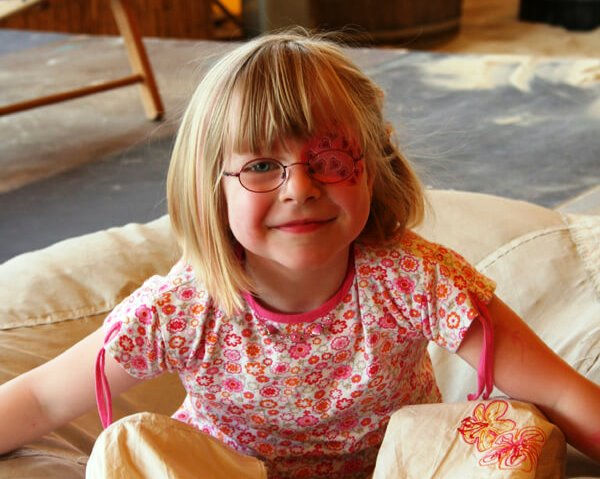
Amblyopia, commonly known as “lazy eye,” is a visual development disorder in which one eye develops reduced vision because the eye and brain are not working together properly. The affected eye often looks normal, but the brain favours the stronger eye, causing underuse of the other. Amblyopia is a leading concern for children’s eye health and affects about 2–3 out of every 100 people. Early diagnosis and treatment are critical for optimal recovery.
Why early detection matters Vision develops rapidly during early childhood. Children treated before around age seven often regain near-normal vision. Left untreated, amblyopia usually does not resolve on its own and can become permanent. That’s why routine eye checks and prompt treatment at Matthews Eyecare Tauranga are essential.
Common causes of amblyopia
Strabismus (misaligned or “turned” eyes) — the brain suppresses the input from the misaligned eye.
Significant refractive differences between the eyes — one eye being more short-sighted (myopic), long-sighted (hyperopic), or astigmatic than the other.
Visual obstruction during development — congenital cataracts, ptosis (drooping eyelid), or other conditions that block clear vision.
Less common causes — eye injuries, retinopathy, or other ocular disease encountered early in life.
Signs & symptoms to watch for
One eye that appears to drift in or out (eye turn)
Eyes that do not seem to work together (poor binocular coordination)
Noticeably poorer vision in one eye
Difficulty judging depth or distances
Head tilting or turning to favour one eye
Squinting or closing one eye to see better
How amblyopia is diagnosed At Matthews Eyecare Tauranga our optometrists perform a comprehensive paediatric eye exam that may include:
Visual acuity testing for each eye (age-appropriate)
Eye alignment and binocular vision assessment
Retinoscopy and refraction to detect unequal refractive errors
Slit-lamp and ocular health checks to rule out cataracts or other obstructions
Early screening programs and regular eye exams for infants, toddlers and preschoolers help detect amblyopia and its risk factors sooner.
Treatment options Treatment depends on the cause and the child’s age but often includes:
Corrective lenses (glasses or contact lenses) to address refractive errors
Occlusion therapy (patching) — covering the stronger eye for prescribed periods to strengthen the weaker eye
Atropine eye drops — used in some cases to blur the stronger eye temporarily, encouraging the weaker eye to work harder
Vision therapy — exercises and supervised programs to improve eye coordination and visual processing
Surgery - occasionally required for strabismus or to remove obstructions such as cataracts
Most children treated early make a substantial recovery. Treatment begun in pre-teens or later can be slower and partially effective, so prompt care is best.
Prevention & practical tips
Schedule routine eye exams: infants, toddlers and school-age children should be checked regularly.
Watch for signs (eye turn, head tilt, covering an eye) and seek assessment promptly.
Ensure children wear prescribed glasses or treatment devices consistently.
Follow-up closely with your optometrist to monitor progress and adjust treatment.
When to see Matthews Eyecare Tauranga If you notice an eye turn, unequal vision, or other symptoms listed above, or if your child has a family history of amblyopia or strabismus - book an evaluation. Our paediatric-trained optometrists will assess vision, identify underlying causes, and recommend an evidence-based treatment plan tailored to your child.
Frequently asked questions (short)
At what age should children first have an eye exam? Newborn screenings and a full pediatric eye exam by 6–12 months are recommended, with follow-ups at ages 3 and before school entry, or sooner if concerns arise.
Can adults benefit from amblyopia treatment? Some adults may gain improvement, particularly with modern vision therapy approaches, but outcomes are generally better when treatment starts in childhood.
Will patching hurt my child? Patching can be uncomfortable initially, but it is a standard, effective therapy. Our team provides support and strategies to improve compliance.
Book your assessment Early action gives the best chance of restoring strong, balanced vision. To arrange an amblyopia screening or paediatric eye exam, contact Matthews Eyecare Tauranga today, our experienced team is ready to help.


cung cấp nhiều dịch vụ seo divu chất lượng traffic user và thiết kế website cùng phần mềm sao chép sản phẩm shopee
https://dichvu.tech/page-sitemap.xml
cung cấp nhiều dịch vụ seo divu chất lượng traffic user và thiết kế website cùng phần mềm sao chép sản phẩm shopee
https://dichvu.tech/page-sitemap.xml